Why logging into OKX is more than a password: a trader’s guide to login, verification, and futures access
What exactly happens between typing your password and starting a leveraged futures trade on OKX — and why do those intermediate steps matter for a US-based trader? That question reframes the typical “how do I log in?” search into something operational: login and verification are the control gates that determine what products you can use, how fast you can respond to market moves, and how much legal or operational friction you’ll face if something goes wrong.
This explainer walks through the mechanics of OKX account access, the practical contours of identity verification (KYC), and how those two systems interact with access to advanced products such as perpetual swaps and quarterly futures. My aim: give you a reusable mental model for the trade-offs (speed vs. security vs. regulatory compliance), one practical checklist for smoother setup, and a short set of scenarios to watch as the platform and rules evolve.
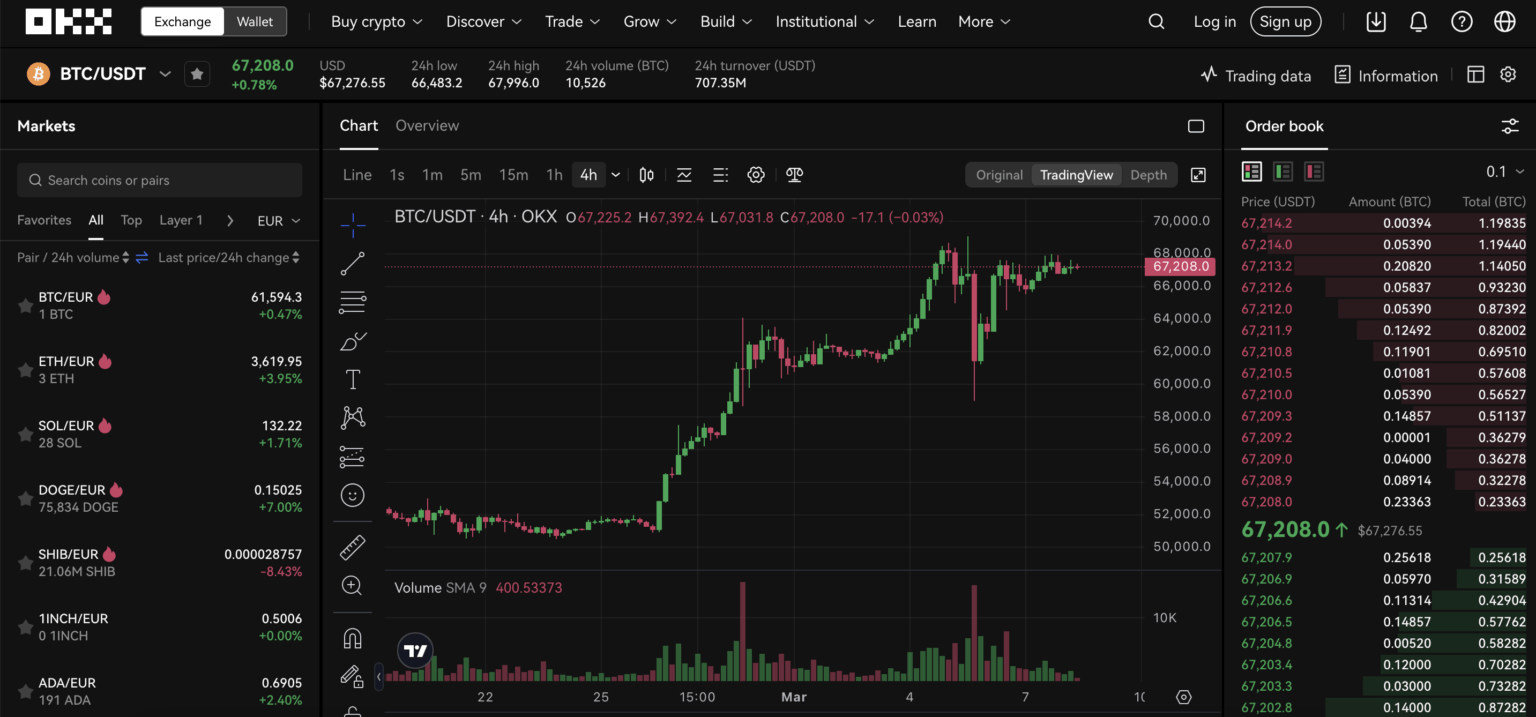
How OKX login works under the hood
At a basic level, logging into OKX is an authentication flow: you present credentials (password, optionally biometric or device-based factors), the platform verifies them, then issues a session token for your browser or mobile app. What many traders miss is the layered nature of that flow. OKX combines standard password authentication with mandatory Two-Factor Authentication (2FA) and AI-driven risk detection. That means three coordinated mechanisms:
– Something you know: password or passphrase.
– Something you have or are: 2FA (SMS, Google Authenticator, or biometric factors on mobile).
– Something the system infers: device fingerprinting and AI signals that flag unusual geographic, timing, or behavioral patterns.
For US users this layering serves two purposes: it hardens accounts against credential theft and it provides audit trails that exchanges use to meet regulatory obligations. Practically, it also changes the troubleshooting model: a failed login might reflect a wrong password, a blocked device, a flagged IP address, or a suspended session pending identity re-check — and the right fix differs by root cause.
Identity verification (KYC): mechanism, thresholds, and practical friction
KYC on OKX is not a single checkbox; it’s a graduated process tied to regulatory compliance and product eligibility. Mechanically, you submit a government-issued ID and complete a facial-recognition liveness check. The platform then associates your verified identity level with permissioned features: basic spot trading may be available at lower tiers, while margin, futures, and certain withdrawals require full verification.
A key trade-off here is speed versus reach. Rapid onboarding is possible for low-friction products, but access to high-leverage futures (OKX offers up to 125x leverage for certain assets) is gated because regulators in many jurisdictions — including the US by proxy through financial partners and policy pressure — want stronger identity assurances before allowing risky derivatives. That means traders expecting immediate access to maximum leverage should budget extra time for document checks and potential manual review.
Another important limitation: KYC verification can fail for technical reasons (poor ID photo, mismatched metadata) and for substantive ones (name/address inconsistencies, sanctions lists). When verification is delayed or rejected, funds are often still recoverable, but trading access and withdrawal limits can be restricted until the issue is resolved.
From login to futures: the permission path
Once authenticated and KYC-verified, a US trader’s journey from the dashboard to executing a futures position follows a predictable permission ladder. First, your account-level verification enables margin and derivatives toggles in settings. Second, product-specific confirmations (risk warnings, margin mode choice: isolated vs cross) appear before order entry. Third, leverage selection and margin allocation take place in the order form itself.
Mechanistically, this ladder reduces the chance of accidental over-leverage: the platform forces explicit settings and confirmations. But traders should be aware of the residual risks: liquidation mechanics on perpetual swaps and quarterly futures can be fast and painful during low-liquidity or high-volatility events, and slippage can widen substantially on thin contracts or during delistings (for example, routine delistings of low-liquidity pairs are part of OKX’s maintenance practices this year).
Practical checklist: smooth login and verification for a US trader
Use this checklist to reduce friction and avoid downtime before trading time-critical derivatives:
1) Prepare clear ID scans (good lighting, all corners visible) and a phone capable of biometric 2FA.
2) Enable hardware-backed 2FA (Google Authenticator, or biometric on phone) instead of SMS where possible — SMS is convenient but more vulnerable to SIM swap attacks.
3) Link and verify an email and a recovery device; keep your device firmware updated so biometric checks and device attestation work reliably.
4) If you plan to use both CEX and the OKX Web3 wallet or browser extension, test the extension separately and understand custody differences before moving funds.
5) Maintain small test trades or transfers when trying a new feature (DEX aggregator swaps, cross-chain transfers) to confirm routes and fees.
Following these steps will not remove all risk, but it reduces the common operational failures that cost a trader time and capital.
Where the model breaks: limits, trade-offs, and unresolved issues
There are honest limits to what login and verification can solve. Cold storage and multi-signature custody protect most assets from exchange hacks, but they don’t protect you from phishing, account social-engineering, or losing access to a self-custodial seed phrase. Also, Proof of Reserves provides transparency about aggregate backing, but it doesn’t individually insure your position against market losses, margin calls, or protocol-level exploits when you route assets into DeFi via the OKX DEX aggregator.
Regulatory uncertainty in the US adds another boundary condition. Policy changes could tighten verification requirements or restrict access to certain derivatives. That would increase friction for traders (more documentation, longer reviews) but also raise systemic safety. In other words: stricter rules trade convenience for more regulatory predictability.
Decision-useful takeaway and immediate next steps
If your near-term goal is to execute futures trades quickly and repeatedly on OKX, prioritize the identity and device controls before you need them. Complete KYC early, use robust 2FA, and test deposit/withdraw flows with small amounts. If you’re experimenting with cross-chain swaps or the Web3 wallet, separate funds between custodial account capital for trading and non-custodial wallets for long-term holdings.
For a direct starting point to the platform and to review the login flow as seen on the web, consider this resource for practical navigation: okx login. It can help orient you to where verification prompts and security settings appear in the web interface.
FAQ
Do I need full KYC to trade futures on OKX from the US?
Yes — in practice, derivatives and higher leverage products require a higher verification level. OKX’s KYC process (ID + facial liveness check) is tied to product permissions. Expect additional checks or manual review if your account shows patterns that trigger risk flags.
Which 2FA method is safest for protecting my OKX account?
Hardware-backed or app-based authenticators (Google Authenticator, Authy with device backups) and biometrics on modern phones are safer than SMS. The trade-off is recoverability: SMS can be easier to recover when you lose devices, but it’s more vulnerable to SIM swap attacks.
Can I use the OKX Web3 wallet and still trade on the central exchange?
Yes — OKX offers both custodial exchange accounts and a non-custodial Web3 wallet. They serve different risk models: the exchange custody is convenient for active trading and margin, while the Web3 wallet gives you private-key control for DeFi and NFT interactions. Keep funds separated according to your risk tolerance.
What happens if my KYC is rejected or delayed?
Trading access, withdrawals, or certain features may be restricted until the issue is resolved. Resolution usually involves resubmitting clearer documents or answering additional questions. Funds are typically secure but inaccessible beyond the platform’s withdrawal rules until verification clears.
Final practical note: treat your login and verification process as part of your trading infrastructure, not an administrative annoyance. The time invested up front — clear ID scans, robust 2FA, segmented custody practices — pays back in faster, safer execution when markets move. Keep watching operational signals (platform delistings, product announcements, and regulatory guidance) because they change the permission map that sits between you and a futures order.